
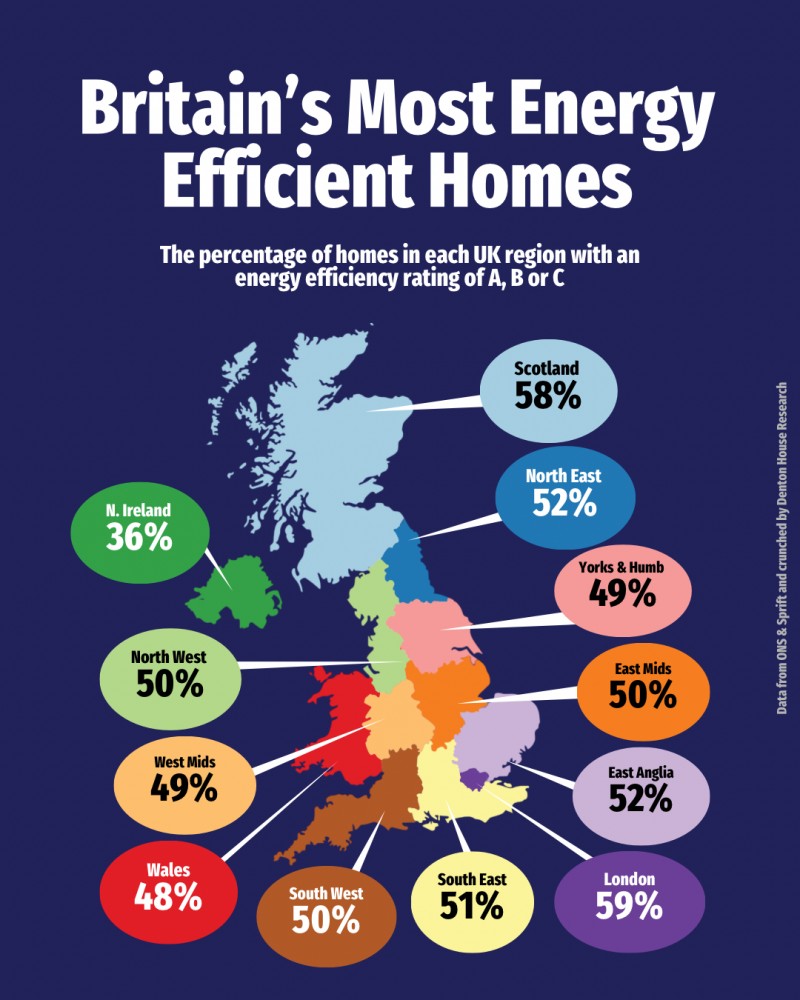
Energy efficiency is becoming an increasingly important part of the housing market, not only because of environmental concerns, but also because of the impact on household bills. An analysis of Energy Performance Certificates (EPCs) across the UK shows the percentage of homes in each region rated A, B or C, with A being the most energy efficient.
London leads the way, with 59% of homes achieving one of the three highest ratings, closely followed by Scotland at 58%. London’s position is partly explained by its large number of flats, apartments and more recently constructed developments. These homes are generally smaller, easier to heat and built to more modern energy-efficiency standards.
Scotland’s figure is particularly interesting. However, direct comparisons should be treated with some care, as the EPC assessment methods, housing policies and reporting systems used in Scotland are not always identical.
At the other end of the table, Northern Ireland has just 36% of homes rated A to C. Its older housing stock, greater number of rural and detached properties, and continued reliance on oil-fired heating all contribute to the difference.
Across England and Wales, most regions sit within a relatively narrow range of 48% to 52%. That suggests the type and age of a property can often be more significant than its geographical location.
For buyers, an energy-efficient home can mean lower running costs. For sellers and landlords, improvements such as better insulation, modern heating systems and upgraded glazing can make a property more attractive to prospective buyers and tenants, particularly while energy costs remain a key consideration.
What Does This Mean for Cirencester?
Here in Cirencester, many homes are full of character, from period Cotswold stone cottages to modern family homes and apartments. While newer properties often achieve higher EPC ratings, many older homes can also be improved through sympathetic upgrades that enhance energy efficiency without compromising their charm.
Whether you’re selling, buying, letting or investing, an EPC should be viewed as more than just another document in the process. It provides valuable insight into a property’s likely running costs and highlights opportunities for future improvements. Although an EPC rating may not yet be at the top of every buyer’s or tenant’s wish list, its importance is likely to grow as energy efficiency continues to influence household budgets.
If you’d like advice on improving your property’s EPC rating, understanding what your certificate means, or discussing the Cirencester property market, we’d be delighted to help. Please don’t hesitate to get in touch with the team at Cannon Estates.